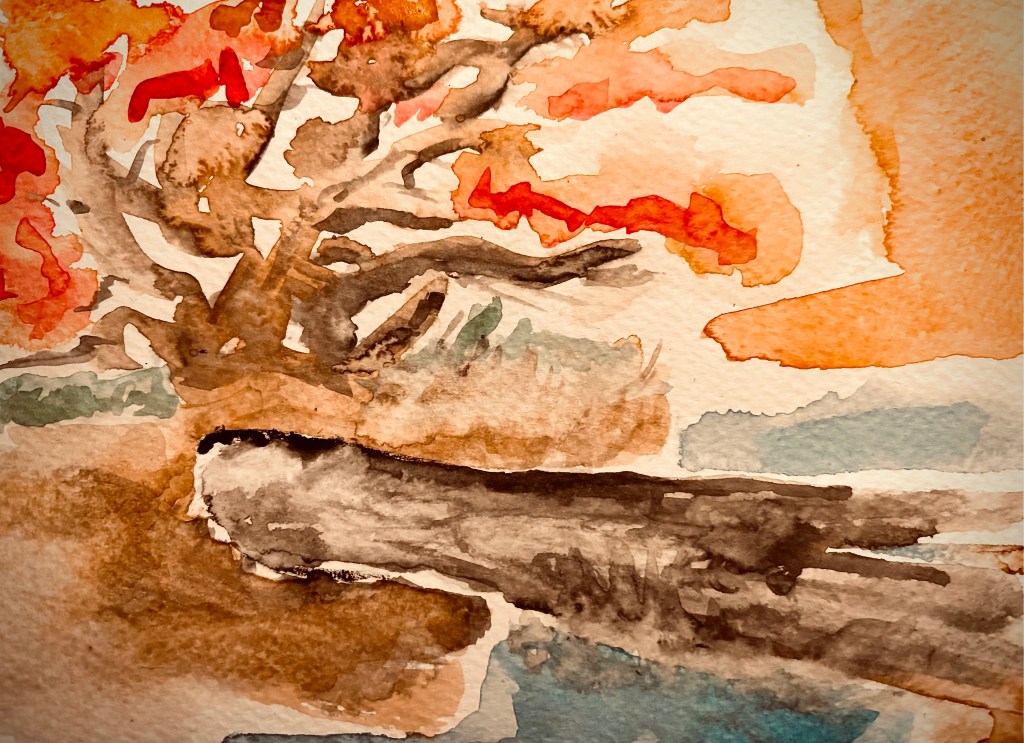
The 11th month brought colder temperatures and more grouse than I expected. Daytime highs hovered near 8°C, with most nights dipping into frost. Woodcock flights slipped south for warmer climes, leaving the odd straggler to probe half-frozen soil for one last Nova Scotian earthworm. Early in the month, we still searched for apple trees as beacons of promise—scarlet lanterns glowing in a vast sea of bare hardwoods and shadowed evergreens.
As deer season hit full stride, we saw more hunters in the woods and adjusted our usual haunts out of respect, giving those chasing whitetails their space without the echo of a dog bell. Hard to believe it’s December now. With only one month left in the season, I find myself staring into the fire of our wood stove, wondering—where did the time go?
Like fly fishing, upland hunting has a spiritual side. But let’s be honest—there’s always a heavy sprinkle of superstition mixed in.
Forgetting your net almost guarantees you’ll hook a trophy fish—hook, mind you, not land. One deer hunter I know refused to change his “lucky wool socks.” After a week in camp, he finally had the sense to hang them outside so the luck wouldn’t spread indoors. I laugh at these things, but I’m not innocent. Compared to those quirks, I suffer from what I consider a far worse affliction.
When things go too well, I get suspicious.
The universe demands balance, and if I feel the scales tipping too far in my favor, I brace for a sharp correction. To keep that in check, I chose to follow some simple rules. If I catch a nice trout, I take a break and let things settle. With salmon, I’ll often leave the pool entirely, as if to dodge the cosmic backlash. As soon as I shoot a brace of grouse, I call it a day. Why only two? As I mentioned…the universe demands balance.
Tilley and I drove an hour north to the Cobequid Hills. Grouse are scattered across the province, but up there—among sugar maples and quiet salmon rivers draining into the Northumberland Strait—I find a peace beyond the covers near home.
We had a productive morning, with two grouse tucked in my game vest as we followed the riverbank back to the car. Leaves had fallen, save for a few apple trees, painting a portrait of browns, yellows, and reds wrapped in a noon fog rolling off the water. My peace broke when Tilley’s bell fell silent—she was locked on point.
I’d emptied my shotgun for the walk out. As I crept forward, pulling a spare shell from my pocket, a voice whispered: “You know the rules. Don’t be greedy.” Before I could agree, a grouse thundered out from the bank—a perfect crossing shot.
The moment I pulled the trigger, I knew the bird would land in the river. It plopped gracefully and drifted downstream, as if to say it was never mine to take. I pointed and called, “Bring it here!” Tilley cocked her head: “I’m not a retriever. This one’s on YOU, boss.”
A few more attempts failed. Watching the bird float farther away, I muttered, “so much for versatile,” and took off after it. The grouse reached midstream, drifting like it had been given back life—and somehow the ability to walk on water.
It was cold. Too cold. Ice clung to the banks, making a swim out of the question. Ahead, I spotted a fallen birch spanning the river. A sweeper like that means trouble for a fly line or canoe, but now it was my only chance. Running up, I dropped my shotgun and shimmied out along the trunk, gripping branches with arms and legs, ready in case the bird made a sudden course correction.
Settled in, I felt a drop—like a plane crossing a sudden front. I turned to see four loyal paws following me out on the tree!
I looked back down and quickly threw my hand into the current, capturing the bird as it drifted by. As I shimmied backward toward the bank, I thanked the dog, the bird, and lastly the universe—for keeping my lesson to a gentle reminder instead of a cold swim in November.
 casts & coverts